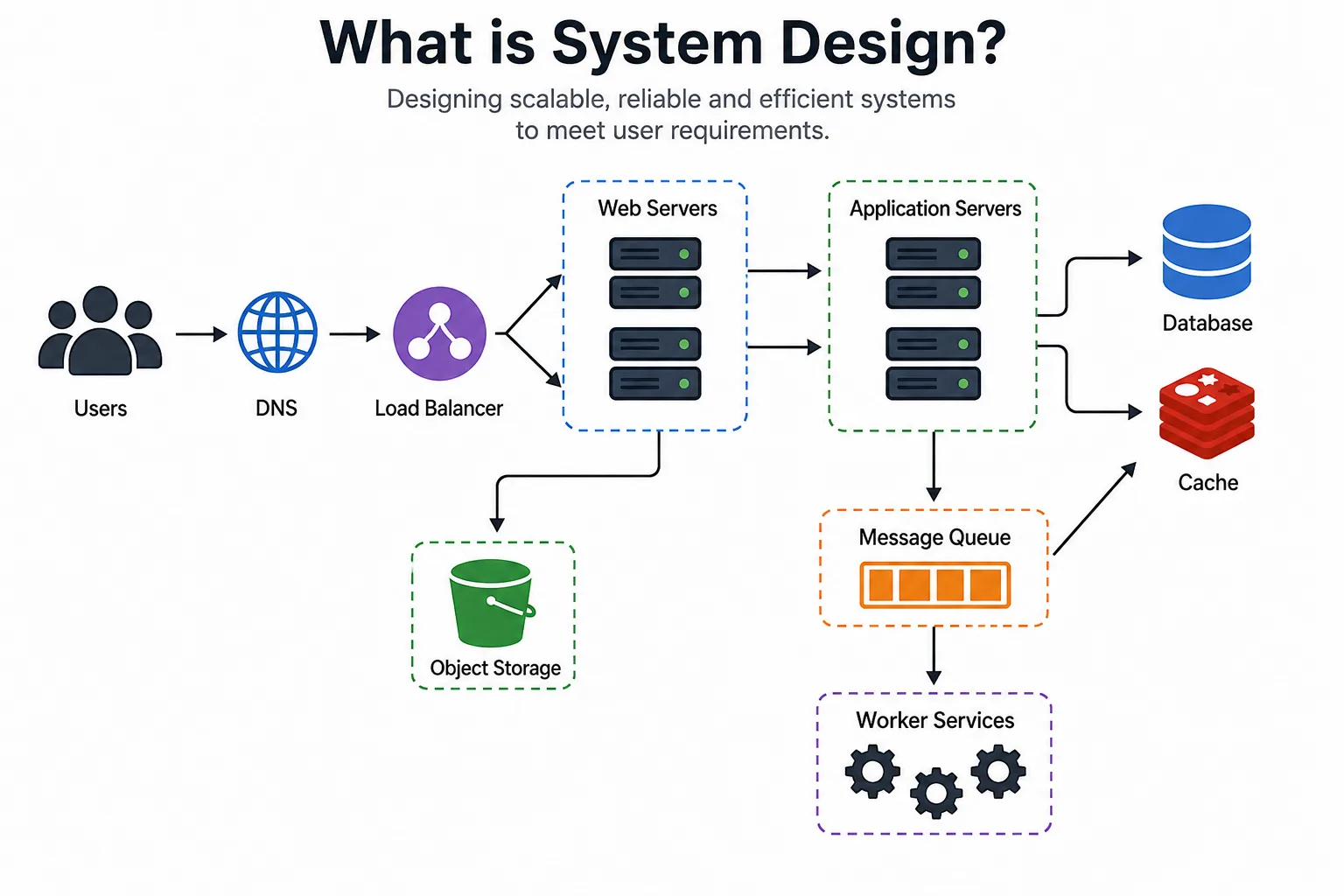
Caching is a technique to store frequently accessed data in a fast storage layer to reduce latency and load on primary databases. Effective caching can dramatically improve system performance and scalability.
Why Cache?
Reduce Latency: Serve data faster by avoiding slow database or API calls.
Decrease Load: Offload backend databases and services.
Improve Scalability: Handle more requests efficiently with the same infrastructure.
Enhance User Experience: Faster response times lead to happier users.
Common Caching Strategies
Read-Through: Application reads from cache first; if not found, loads from database and populates cache.
Write-Through: Writes go to cache and database simultaneously, keeping them in sync.
Write-Back (Write-Behind): Writes go to cache and are asynchronously written to the database.
Cache Aside (Lazy Loading): Application manages cache population and invalidation explicitly.
Time-to-Live (TTL): Cached data expires after a set period.
Tools: Redis vs Memcached
FeatureRedisMemcachedData TypesStrings, Lists, Sets, HashesStrings onlyPersistenceYesNoReplicationYesNoPub/SubYesNoUse CasesSessions, Queues, LeaderboardsSimple cacheScriptingLua scriptsNo
Redis
In-memory data structure store with persistence options.
Supports advanced data types and atomic operations.
Can be used for caching, pub/sub, queues, rate limiting, and more.
Memcached
Simple, high-performance, distributed memory object caching system.
Focused on speed and simplicity.
No persistence or advanced data types.
Example: Redis Caching in Python
import redis
r = redis.Redis(host='localhost', port=6379, db=0)
r.set('key', 'value', ex=60)  # Set with 60s TTL
print(r.get('key'))
Drawbacks and Considerations
Stale Data: Cached data may become outdated if not invalidated properly.
Cache Invalidation: One of the hardest problems in computer science. Strategies include TTL, explicit invalidation, and event-driven updates.
Memory Limits: Caches are typically in-memory and limited by available RAM.
Consistency: Risk of serving outdated or inconsistent data.
Cold Starts: Cache misses can cause spikes in backend load.
Beyond Redis/Memcached
CDNs (Content Delivery Networks): Cache static assets closer to users for faster delivery.
Local Caching: In-process memory for ultra-fast access (e.g., LRU caches in application code).
Distributed Caching: Share cache across multiple servers for consistency and scalability.
Hybrid Approaches: Combine local, distributed, and CDN caching for optimal performance.
Real-World Use Cases
Web Applications: Cache rendered HTML, API responses, or session data.
E-commerce: Cache product details, inventory, and pricing.
Social Media: Cache user profiles, timelines, and trending topics.
Analytics: Cache query results and dashboards.
Best Practices
Cache only what is expensive to compute or fetch.
Set appropriate TTLs to balance freshness and performance.
Monitor cache hit/miss rates and adjust strategies as needed.
Plan for cache failures—always have a fallback to the source of truth.
Secure your cache (authentication, network restrictions).
Conclusion
Caching is vital for high-performance systems, but must be used judiciously to avoid consistency issues and stale data. A well-designed caching strategy can be the difference between a sluggish app and a lightning-fast user experience.
💡 Remember: Always plan for cache invalidation and data consistency. Test your caching strategy under real-world conditions.